Journal article
Jobs, Skills and Regional Implications of the Low Carbon Residential Heat Transition in the UK
11 March 2025

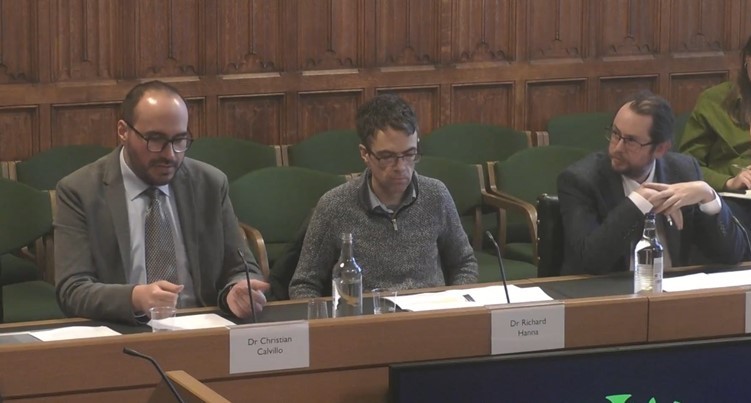
The Commons Energy Security and Net Zero Committee has released a report stating that significant intervention is needed in the UK workforce if we are to meet our clean energy 2030 and 2050 buildings decarbonisation targets. The Committee’s report further considers the Clean Energy Jobs Plan published by the Office for Clean Energy Jobs in October, after the inquiry finished taking evidence.
Work from UKERC Researchers Richard Hanna (Imperial College London) and Christian Calvillo (University of Strathclyde), who gave oral evidence to the committee, is cited throughout the report. This work draws on UKERC research on Green Jobs, Net Zero Skills, and a journal paper on the regional employment impacts of a UK heat pump rollout. UKERC researchers Kaylen Camacho McCluskey, Dr Richard Carmichael and Dr Aidan Rhodes contributed to the written evidence from Imperial College London, which the report references in various places.
The Committee calls for ‘local skilled labour supply’ conditions in Contracts for Difference, an expanded energy skills passport scheme, a leading role for local authorities to accelerate building retrofit, greater clarity for industry and consumers on rebalancing levies between electricity and gas, reforming EPC ratings and bringing forward the Warm Homes Plan. The UK needs an estimated 250,000 additional workers just to meet new housing targets, and many more for retrofit.
Dr Richard Hanna, Research Associate, Imperial College London:
“Our Net Zero Skills briefing paper called for a central coordinating body to monitor, research and advise on skills development for the low carbon transition. The Committee’s report clearly emphasises the role of the Office for Clean Energy Jobs in delivering national workforce planning through the Clean Energy Jobs Plan, including close coordination with regions and Scotland, Wales and Northern Ireland.
As the Committee acknowledges, transition planning should be holistic and extend beyond the Clean Power 2030 mission to other sectors, including buildings energy retrofit, transport and industry. In the wake of the decision to end ECO funding early next year, publishing the Warm Homes Plan is now an essential step to maintain and expand consumer demand for heat pumps and home insulation and retain confidence in the supply chain.”
Dr Christian Calvillo, Senior Research Fellow, Centre for Energy Policy, University of Strathclyde:
“The Energy Security and Net Zero Committee’s report underscores what our research has consistently shown about the lack of strategic coordination necessary to meet clean energy targets. The Committee’s emphasis on clear government signposting for investment planning is crucial, otherwise private sector investment remains uncertain.
Equally important is their recognition that workforce demands must be assessed holistically across all net zero sectors, not in isolation. Our analysis reveals vast discrepancies in workforce estimates, reflecting how little systematic understanding exists of what skills are actually needed, where, and when.
By spacing construction activity strategically and improving geographic and timeline-based workforce assessments, the UK can avoid labour supply bottlenecks while ensuring a just transition. These recommendations align with our evidence: coordinated planning and policy certainty are essential to delivering a skilled workforce for the clean energy mission.”
A previous UKERC review has highlighted inadequate measures to track the quantity and quality of green jobs, skills and occupations. Insights provided in the report addressed the need for central intervention to provide policy certainty and coordinate training and workforce needs across the country. The pair also provided warnings that if not properly coordinated, increasing competition could increase labour costs, and that the transitioning existing oil and gas workforce alone may not be able to deliver clean energy.
The Climate Change Committee estimates net employment gains from the energy transition of between 135,000 and 725,000 jobs in the next four years. The vast majority of these workers will have to train or reskill.
Read the full recommendations from the Committee to Parliament, and the final report.