Briefing paper
What Could Keep the Lights on When the Wind Stops Blowing in a Zero Carbon UK Electricity System?
02 September 2026

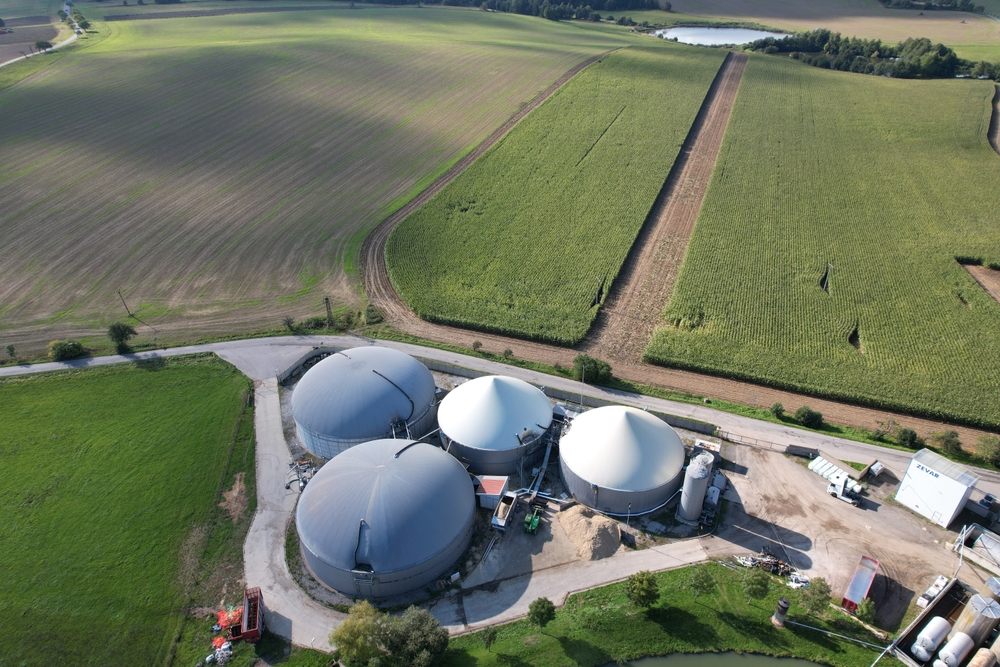
Released today, new research identifies technologies that could help support the UK’s transition to a low carbon electricity system, while highlighting the policy and investment challenges to bringing them forward at scale.
The UK will need a combination of ultra long-duration electricity storage and low carbon dispatchable power to support a resilient, net zero electricity system, according to new research from the UK Energy Research Centre (UKERC) and the Energy Systems Catapult.
The research assesses which ultra-long duration electricity storage (Ultra-LDES) and low carbon dispatchable power (LCDP) technologies could be delivered in the UK by 2030 to 2035. It identifies 10 technologies with the greatest potential for accelerated development and deployment, five in each category.
The report, commissioned by UKRI, supports the Government’s recent launch of a £28 million Ultra-Long Duration Energy Storage Challenge, supporting the development of technologies capable of storing clean electricity for 100 hours or more.
The research identifies hydrogen stored in salt caverns, metal-air batteries, flow batteries, adiabatic compressed air energy storage, and pumped hydro storage as the five Ultra-LDES technologies most promising for accelerated development. It finds that each has different advantages and constraints. For example, hydrogen storage offers exceptionally long storage and discharge durations, but has site constraints, while metal-air batteries have fewer site constraints, but are more expensive, have lower storage capacity and may find it harder to reach ultra-long discharge durations.
The research also identifies five technologies for low carbon dispatchable power: hydrogen reciprocating engines, gas turbines, combined-cycle gas turbines with carbon capture and storage, bioenergy with carbon capture and storage, and small modular nuclear reactors.
The analysis does not identify a single technology as the preferred solution. Instead, whole-system modelling suggests that least-cost net zero pathways are likely to require different technologies working together. Storage can help manage electricity supply deficits, while fast dispatchable generation can provide additional support during particularly large shortfalls.
Dr. Jamie Speirs, UKERC Co-Director and lead author of the report, said: “As the UK moves towards a predominantly renewable electricity system, we will need ways of managing periods when wind and solar output is low. Our research shows that ultra-long duration electricity storage and low carbon dispatchable power can make complementary contributions to this challenge. There is no single technology that provides a perfect solution, so the priority now is to develop a portfolio of options while creating the market and investment conditions needed to bring the most promising technologies forward at scale.”
As the UK moves towards the Clean Power 2030 target, renewable electricity is expected to provide the majority of the country’s electricity. This increases the importance of technologies that can provide flexibility when wind and solar generation is low. National Energy System Operator (NESO) analysis indicates that meeting Clean Power 2030 could require between 4 and 6 GW of long-duration electricity storage and between 2 and 7 GW of low carbon flexible generation.
The research also highlights significant barriers to deployment. These include supply chains and investment risk, geographical and siting constraints, market access and challenges integrating new technologies into the wider electricity system. Technologies that offer high system value may therefore remain difficult to finance and deploy under current market arrangements.
The researchers identify three broad areas where policy action will be important: continued innovation funding to improve performance and reduce costs; reforms to market mechanisms and business models so that long-duration flexibility and firm capacity are appropriately valued; and improvements to the wider conditions for deployment, including infrastructure, system integration and social acceptance.
The Government’s new Ultra-LDES Challenge focuses on two areas highlighted by the research: the development of new electrochemical storage technologies capable of providing electricity for more than 100 hours, and the development and testing of underground hydrogen storage systems. The Challenge includes £28 million of funding, with up to £3 million available for studies into electrochemical Ultra-LDES technologies.
The announcement forms part of the wider £102 million suite of Clean Energy Challenges being delivered through the R&D Missions Accelerator Programme, alongside the £74 million Consumer-led Flexibility Challenge. The Government says the programme is intended to support technologies that can contribute to a more secure and affordable clean energy system.