Research report
Decarbonising Heat: Synthesis Report
18 February 2025

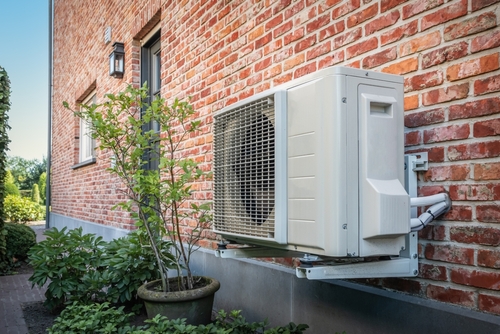
A new online tool developed by UKERC Researchers at Cardiff University’s School of Engineering provides detailed estimates of electricity demand and flexibility from residential heat pumps across Great Britain.
The tool provides hourly estimates of the heat supplied and electricity consumed by heat pumps, taking account of factors including local weather conditions, heating modes and heat pump performance. The modelling is available at Lower Layer Super Output Area (LSOA) level and can be visualised by local authorities, providing a detailed picture of how heat pump demand could vary across different areas.
As the electrification of heating progresses, understanding where and when heat pump demand will occur will be increasingly important for planning and operating the electricity system. The tool can support electricity network planning by helping to assess the potential impact of heat-driven demand on local infrastructure, including substations.
The tool also provides estimates of the flexibility that heat pumps could technically provide to the power system. Heat pumps can potentially adjust the timing of their electricity consumption while continuing to provide the required level of heating, creating opportunities to manage demand and support system operation.
The research has been supported by UKERC, the Energy Demand Research Centre (EDRC) and the National Energy System Operator (NESO).
Modelling from the UKERC Cardiff University team has already helped NESO by providing more accurate real-world data to improve its residential heat modelling.
The research team is continuing to develop the work, with current research focused on moving beyond estimates of ‘technically available’ flexibility to better understand ‘realisable’ flexibility – the proportion of flexibility that could be delivered in practice.
The online platform is now available to explore, and the research team welcomes feedback from researchers and industry professionals as the tool is further refined.
Explore the heat pump electricity demand and flexibility tool.