Journal article
A Policy-relevant Research Agenda to Support Accelerated Industrial Decarbonisation in the UK
10 February 2026

As the UK moves towards a decarbonised electricity system, industrial consumer-led flexibility (CLF) is emerging as a key, yet poorly understood, component of the transition. Electrification is expected to deliver the bulk of emissions reductions for energy-intensive industry, meaning flexible industrial demand could play an important role in easing pressure on the grid. However, the practical, technical, and economic conditions that would allow industry to provide this flexibility remain unclear.
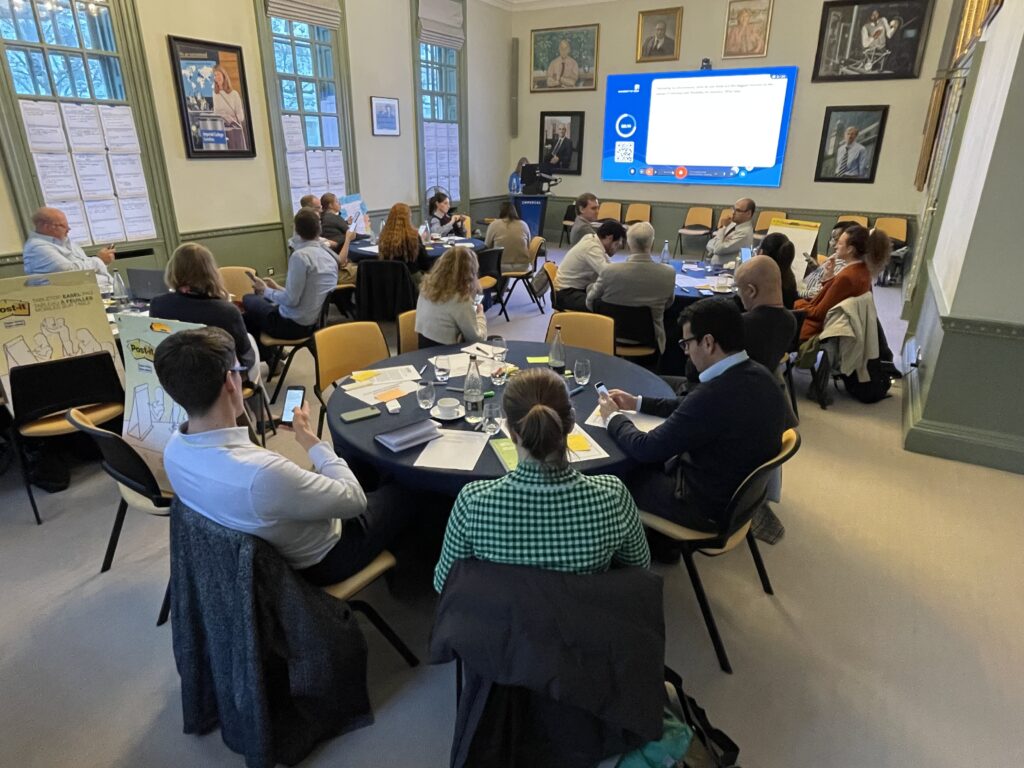
To shed light on the issue, we ran a workshop in November 2025, bringing together experts from manufacturing, regulators, academia, think tanks, and government. Attendees jointly identified and voted on their top research priorities to guide work in the field. The findings from the workshop have been published in this Meeting Report.
A number of cross-cutting challenges were identified:
Alongside these challenges, the conversations also generated a set of more detailed insights:
Prevailing wisdom suggests that the greatest flexibility potential lies with the largest industrial sites. Workshop discussions suggested that the opposite may be true: smaller industrial users could have more practical potential to shift their demand. Aggregators can play a crucial role in simplifying participation for smaller users with low load profiles.
Technologies for electrification, energy storage, and process automation exist, yet adoption is held back by knowledge and data gaps on both sides of the meter. Many organisations, even large ones, are unaware of the full range of options for managing energy demand. On the supplier side, the absence of centralised data on industrial consumption makes it difficult for system operators and policymakers to design targeted incentives. Strengthening data sharing and digital infrastructure will be key enablers to support an accurate understanding of flexibility potential.
Categorising industry by broad sectors (e.g., automotive, steel, food and drink, chemicals) may be a poor guide to flexibility potential. More important are process type, site characteristics, and customer willingness to adapt product requirements. Batch operations, with natural start-and-stop points, can in theory shift the timing of their demand and are suitable targets for CLF. Continuous processes, operating 24/7, have very limited potential to change their timing, but may be suitable for behind-the-meter generation or storage measures which provide flexibility without altering production schedules.
On the basis of these discussions, participants identified four research priorities.
Achieving industrial flexibility will be as much a human challenge as an engineering one. The biggest barriers are not technological, but a lack of knowledge, misaligned incentives and the potential mismatch between flexibility provision and business priorities. Most industries do not design their business models around electricity use, so marginal earnings from grid services are unlikely to drive change without a broader realignment of value, risk and responsibility.
As the energy system becomes more electrified and more dynamic, understanding how industrial processes, commercial constraints and decision-making cultures operate will be central to making industrial CLF viable at scale. Addressing the research priorities identified during this workshop is an essential step towards building that understanding. We look forward to continuing the conversation as this work develops.